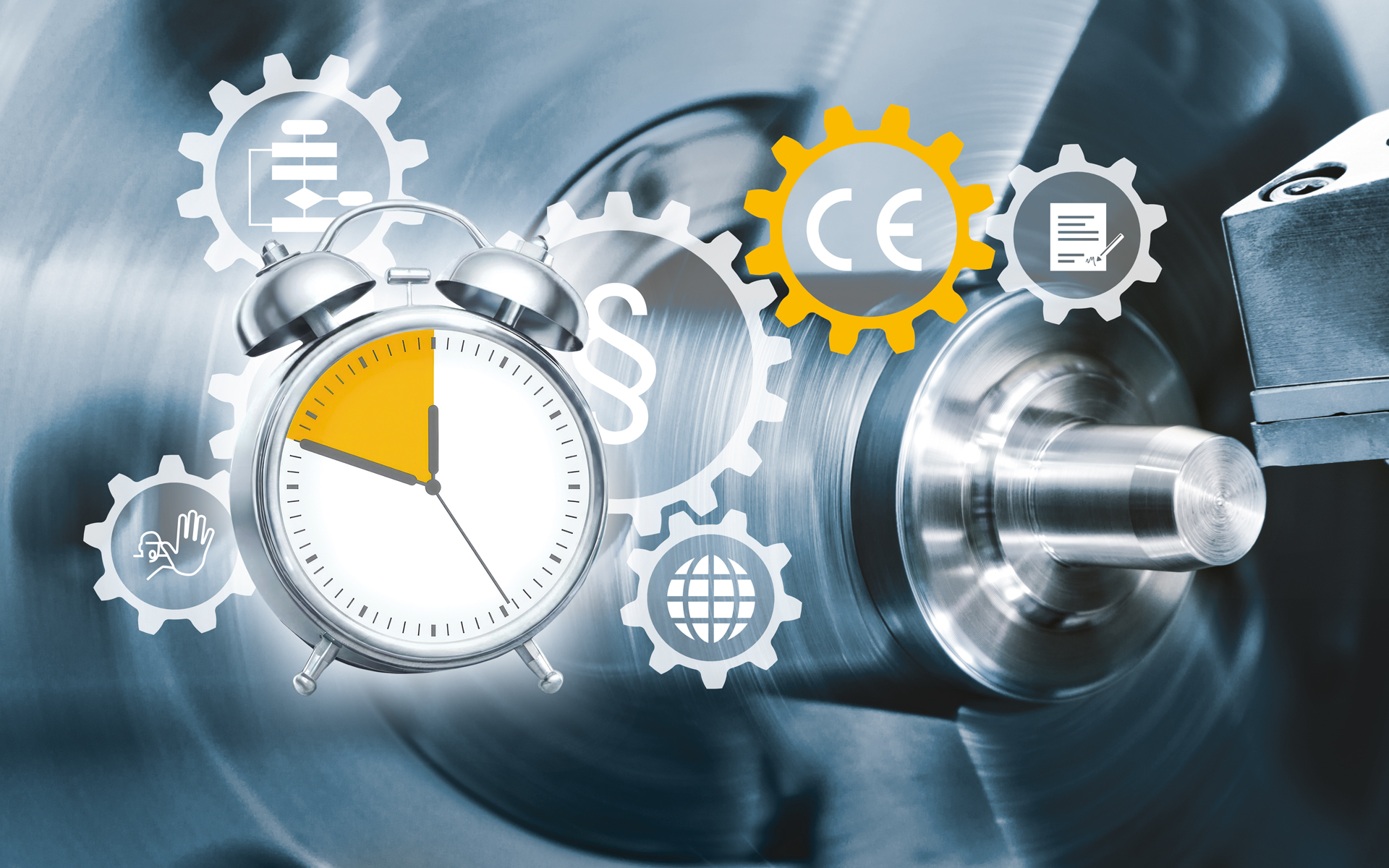
The new EU Machinery Regulation (EU) 2023/1230 will be mandatory in all EU member states from 20 January 2027. As there is no transition phase, those who prepare in good time will benefit in particular – they’ll ensure planning certainty and can use the new requirements to their competitive advantage.
The Machinery Regulation (MR) has a clear objective: machinery should not only be mechanically and functionally safe, but should also meet the requirements of an increasingly digital world. Cybersecurity, digital documentation and clear processes for software updates are no longer optional extras, but a legal obligation. This is the EU’s response to the increasing interconnectivity of machinery and the associated risks.
Focus on manufacturers: Digitisation and Safety as standard
The MR opens up new opportunities for manufacturers to create modern documentation. In future, operating manuals and declarations of conformity are to be made available digitally – for at least ten years. Anyone who has so far relied solely on paper will need to think again.
The regulation also requires that Security be taken into account as early as the development process. Machinery must be protected from manipulation such as online corruption or the defeat of safeguards. Manufacturers must establish clear processes for secure software updates and remote access.
Particularly critical: high-risk machinery. In addition to the conformity assessment procedure carried out by the manufacturer, it must also undergo testing by a notified body. Manufacturers must check whether their products fall into this category – and take the necessary steps in good time. This can be achieved by comparing the machinery with the high-risk categories defined in the MR and, in case of uncertainty, involving notified bodies at an early stage.
Operators: responsibility does not end with the purchase
Operators of machinery also have an obligation. The MR redefines the term “substantial modification”. Anyone who converts or retrofits machinery must check whether the conformity must be assessed as a result. A conformity assessment procedure for machinery safety is required if a machine undergoes substantial modification or if changes are made that affect the machine’s compliance with the statutory provisions for CE marking. If a substantial modification has taken place, the operator becomes the manufacturer – with all the obligations that entails.
Cybersecurity is also a key issue for operators. Manipulation, corruption and cyber attacks are real risks. The regulation therefore requires measures to be documented and employees to be trained. Anyone who is negligent in this regard not only risks security gaps, but legal consequences.
In addition to the declaration of conformity, technical documentation must be available at all times for all plant and machinery. For operators, this means that processes must be designed in such a way that these documents are readily available – even years after commissioning.
Training is the key
Technical specifications are one thing, the people behind them are another. Employees in development, quality assurance and service must be trained – particularly on cyber topics. This is the only way to avoid security gaps and implement the new specifications efficiently. Operators should also ensure that their teams are made aware of safe operating and maintenance processes.
Training from Pilz
The Pilz Academy provides specialised training to help companies implement the Machinery Regulation.
Consulting
If you are looking for expert support, Pilz offers a day with a consultant, who will provide an in-depth overview of the measures required and the timeframe within which they need to be implemented.
Conclusion: The clock is ticking
The Machinery Regulation is not a paper tiger. It will permanently change the everyday lives of manufacturers and operators. If you act now, you can plan the transition strategically and secure competitive advantages. If you wait, you risk stress and costs.
5 tips for the next steps towards MR compliance
Fully convert operating manuals, declarations of conformity and technical documents to digital formats and define processes for long-term, audit-proof storage (at least ten years).
Practical Tip: Digital Documentation with MYZEL
The MYZEL platform helps machine manufacturers provide operating instructions, declarations of conformity and technical documents in a structured digital format—from creation to long-term, audit-proof storage in accordance with the MVO.
Consider security requirements right from the development phase – from secure software design and update processes to protected remote access.
Check whether machinery falls into one of the MR’s high-risk categories and plan the necessary assessments and inspections by notified bodies well in advance.
Create processes that ensure technical documentation is available at all times. At the same time, changes and interventions on machinery must be properly assessed, particularly with regard to potential “substantial modifications”.
Train employees in development, service and operations when dealing with cyber risks, security-related updates and the central requirements of the MR.

1 Comment
👍