


At first glance, machinery safety often appears rigid, rule-bound and lacking in innovation. On closer inspection, however, automation demands that safety technology keeps pace. For decades, Pilz has demonstrated that innovation and safety are not mutually exclusive, but open up new avenues together.
For a long time, the maxim when it came to safety was to safeguard machinery using strict, inflexible concepts – a method that was effective, but rigid. That’s why at first glance, there appears to be no room for new technologies in machinery safety. Almost by definition, it is a conservative component in control and automation technology. Another reason is that safety, unlike hardly any other area, is shaped by laws, standards and norms. These change only rarely and determine what is and is not permitted.
How safety and innovation go together
Industry is constantly working to improve technical approaches, processes and production sequences in order to optimise efficiency and costs. Safety must address comparable challenges in the field of automation technology.
This is not possible without breaking new ground. One example is the PNOZ – Pilz, NO for “NOT-AUS” (German for E‑STOP) and Z for “zwangsgeführt” (positive-guided). Launched by Pilz in 1987, it was the first safety relay to reliably stop machinery in the case of danger. It was smaller than the conventional circuit, easier to handle and, above all, safer – as confirmed by a certified type approval test. This came at a time when machinery safety was becoming increasingly important also from a legal perspective, but at the same time had to be implemented as simply as possible for plant operators.
Innovation made by Pilz
Pilz launched the 1. PNOZ in 1987.
Pilz holds
220 patent families.
To date, 0 accidents have been caused by a Pilz product.
1995: Pilz writes industrial history with the world’s first safe PLC, the PSS 3000
In 1995, Pilz dared to take an even bigger step: legislation at the time expressly prohibited the use of electronics for safety functions in controllers. Nevertheless, Pilz recognised the potential and launched the first freely programmable safety controller PSS 3000 in 1995. The legal requirements only changed following tough negotiations with federal ministries and European committees. PSS 3000 paved the way for the IEC/EN 61508 series of standards published in 2001, which still today is regarded as the basic standard for functional safety.
“Pilz has grown in tandem with machinery safety, but machinery safety has also grown in tandem with us,” says Jürgen Kitzing, summarising. He and his team are responsible for getting Pilz products approved by TÜV, BG and others. “Pilz made industrial history,” says Berthold Heinke, looking back. Until 2018, he was Head of the Electronics Competence Centre of the German employers’ liability insurance association for woodworking and metalworking (BGHM). For decades, Pilz has worked closely with employers’ liability insurance associations and approval bodies, so that new technologies can be translated into practical, safe products. Pilz repeatedly presents these institutions with tough nuts to crack. The 220 patent families held by Pilz, i.e. the registered inventions, is evidence of this alone.
How safe products are developed
Designing a functionally safe product is one thing, implementing it is quite another. But what makes a product functionally safe in the first place?
Functionally safe means that all of a machine’s safety-related functions are implemented in such a way that any error will not lead to the loss of the safety function and, as a result, an accident on the machine is safely prevented.
To achieve this, a safety product must be able to do two things: Firstly, it must be able to react to random hardware errors, if a component should fail or in the event of mechanical damage, for example. This is relatively easy to resolve by ensuring that the individual components are redundant, i.e. duplicated.
On the other hand, it is also important to avoid systemic errors, such as errors in the hardware or software programming. This is significantly more complex. Take a look at the work of software developers and you’ll see: the actual procedure for programming safety barely differs from that used for standard automation software. The difference lies in the detail: “Safety can only be achieved through clean working practices, recurring reviews and extensive testing. That means a lot of effort,” explains Matthias Holzäpfel, Vice President Product Development at Pilz, who has worked as a developer at Pilz for over 20 years.

„When it comes to safety, experience pays.“
Matthias Holzäpfel, Vice President Product Development at Pilz
He can confirm: “When it comes to safety, experience pays. It’s important to share this wealth of knowledge internally.” Pilz makes sure this happens with its best practice teams, for example, in which the developers of different products share their experiences and pass on their knowledge of best practice.
Experience is good, a lived safety culture is better
At Pilz, it is Christoph Weishaar’s job to ensure that experience and routine do not allow care to slip. He is the Safety Manager and Explosion Protection Officer. “Safety is anything but a foregone conclusion. Especially if there are no mistakes over very long periods of time. Then there is a risk that important matters will be overlooked or that necessary measures will not be taken.”
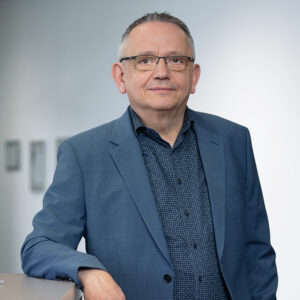
„Safety is not a foregone conclusion.“
Christoph Weishaar, Safety Manager and Explosion Protection Officer at Pilz
As Safety Manager, he is the link between the technology, the legal requirements and the operational application of the products. For example, if a potentially safety-related fault occurs in the field, it triggers an internal analysis process that looks at the fault in its entirety. Depending on the case, this may result in the affected customers being notified or even in the product being redesigned.
Just as Pilz has its products approved, so too does it have its functional safety management (FSM) audited and certified by TÜV SÜD. In other words, the way in which products are developed and manufactured safely. What’s more, since 2022, Pilz’s development process has been proven to be not only Safe but also Secure: TÜV SÜD has tested and certified Pilz’s development processes based on the standard IEC 62443–4‑1.
Once product development is completed, but before the external approval process begins, all new Pilz products must still undergo testing in the company’s own laboratories, including an accredited EMC laboratory for electromagnetic compatibility with immunity tests and emission measurements. Pilz has also built mechanical test rigs and climate chambers to simulate extreme environmental conditions such as wet, cold and heat.
The proximity to product development has the advantage that product features can be tested quickly and simply, and product improvements can be tested directly on-site in the laboratory. Pilz’s laboratory has been accredited to DIN ISO 17025 by the German Accreditation Body (DAkkS) since 2004. This proves the quality and competence of the test laboratory in accordance with international standards and simplifies international product approvals considerably.
The most important number: Zero
One figure clearly illustrates just how well Pilz manages to combine technological progress, functioning development processes and practicality: zero.
“A Pilz product has never caused an accident — whether in industry on presses and packaging machines or in railway technology or amusement parks,” says Christoph Weishaar with pride.
Customers can rely on the fact that the protection of human, environment and assets is guaranteed. Today, however, safe automation technology has to do more. “Good safety is unobtrusive, it neither hinders the operator nor impairs productivity,” explains Arndt Christ, Vice President Product Management. “On the contrary: properly dimensioned safety helps to prevent failures and reduce downtimes.”
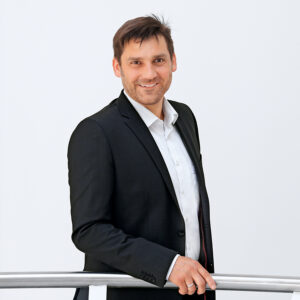
„Good safety is unobtrusive, it neither hinders the operator nor impairs productivity.“
Arndt Christ, Vice President Product Management at Pilz
How is this achieved? “Our products always have a specific task to fulfil, for example a gate guard locking device. So the application perspective plays an essential role in the design of our products,” explains Arndt Christ.
One result of this is that Pilz offers special modules or versions of many of its products for use in specific areas, such as packaging, railway or burner technology. Another is that Pilz places great value on functionality and user-friendliness through the openness of its products, simple and fast fault diagnostics, reduced engineering times, intuitive operation and programming, for example.
Safe automation technology as the supreme discipline in automation
Ultimately it’s clear: safe automation technology is not developed from good ideas alone, but from consistent, precise and responsible action – and the courage to break new ground. The result: product solutions that not only prevent accidents and support users in their everyday lives, but also give customers peace of mind when it comes to safety.